Yes. Our ceiling-recessed motorised screens fit in front of windows, bifold doors, French doors and bay windows. In many rooms it's the best place for them. When the screen is up, it disappears into the ceiling and you have your view back. When it comes down, the window or doors are covered and the room becomes a cinema.
It works because of how the screen is made. The material has a fibreglass core inside PVC, with a matte white viewing surface on the front and a black backing. The black backing stops light from the glass behind showing through the picture.
We've supplied hundreds of screens for use in front of windows and doors. This guide covers how they're installed, how to get a good picture in the daytime, sizing, and where the speakers go.
WHY WINDOWS AND DOORS MAKE GOOD SCREEN POSITIONS
Many homeowners now choose bifold doors or large glazed openings for light and the view out. That takes up a whole wall, often the one where a TV would otherwise go. The seating usually faces the doors to make the most of the view, so it already faces the right way for a screen. Bay windows work in the same way. In many living rooms the bay sits opposite the main sofa, which puts it in an ideal viewing position. A screen in front of the glass gives you both: the view during the day and a large cinema picture in the evening, without a TV taking up wall space.
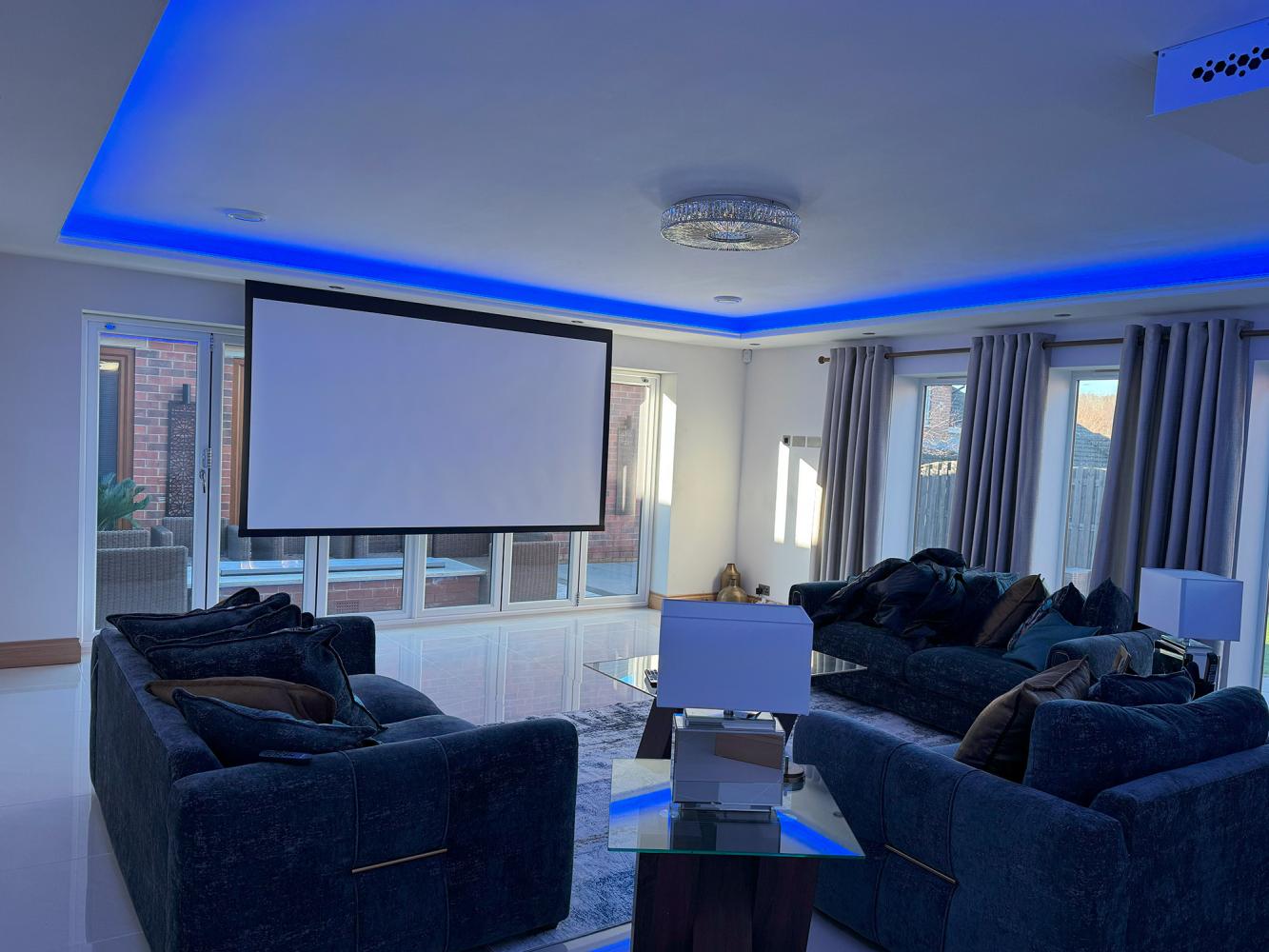
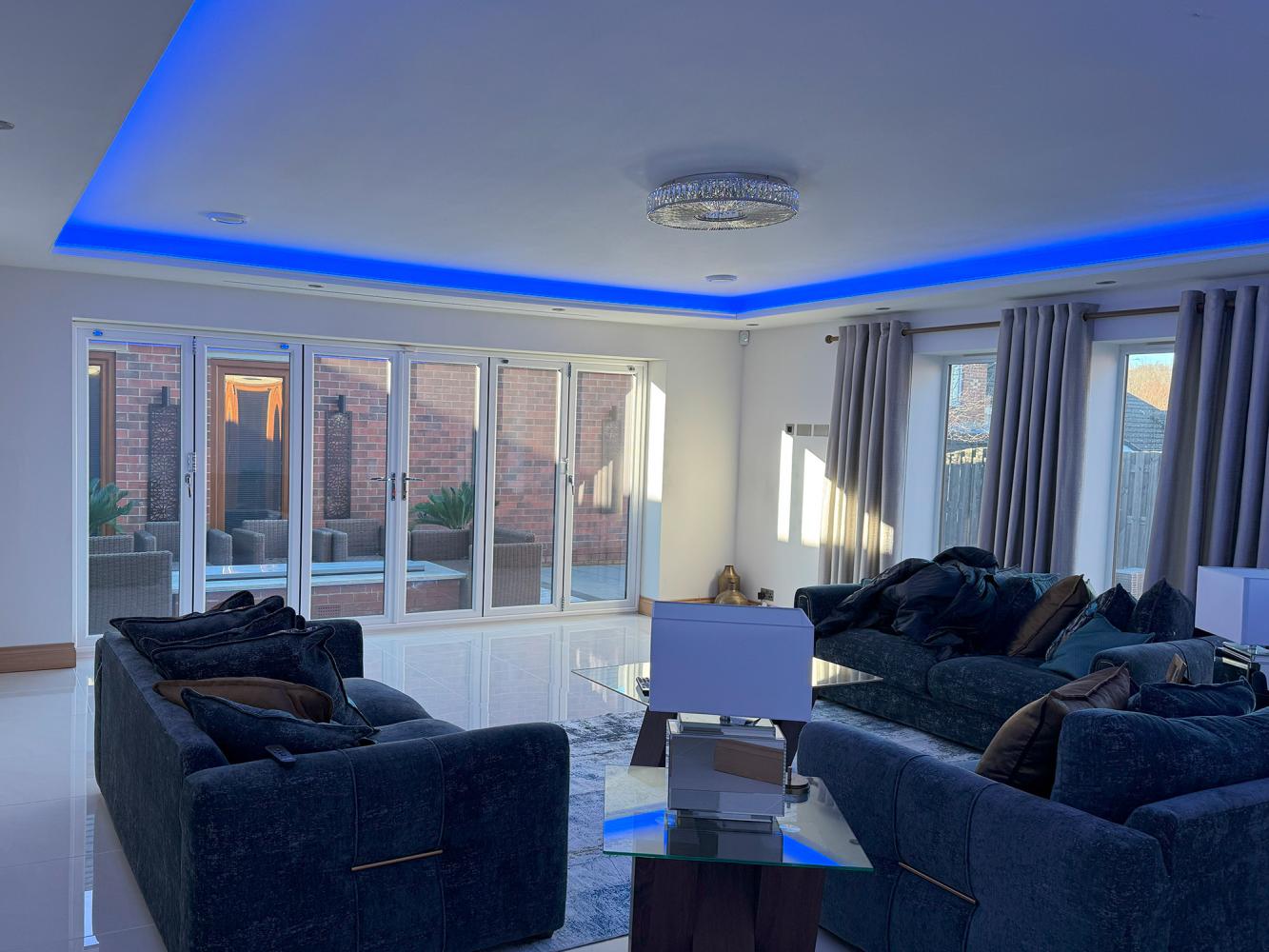
PROJECTOR SCREEN IN FRONT OF BIFOLD DOORS
A growing number of homeowners are opting for bifold doors within their homes to take advantage of the light and views that they provide. One issue that arises however is where to place a TV. This is usually because the use of bifold doors eradicates one of the usuable wall spaces. You may also want your main seating to look out of the bifolds to take advantage of the view.
Recessing a projector screen in the ceiling in front of the bifold doors means that you can turn your seating to face the bifold doors making the most of the view in the daytime and then have an extremeley large screen when you want it. There are many options for the design and installation of the screen, we cover some of these in our article "Ways to hide a projector screen".
If you are looking to install a projector screen in front of doors then please contact our customer service team on 01952 898533.
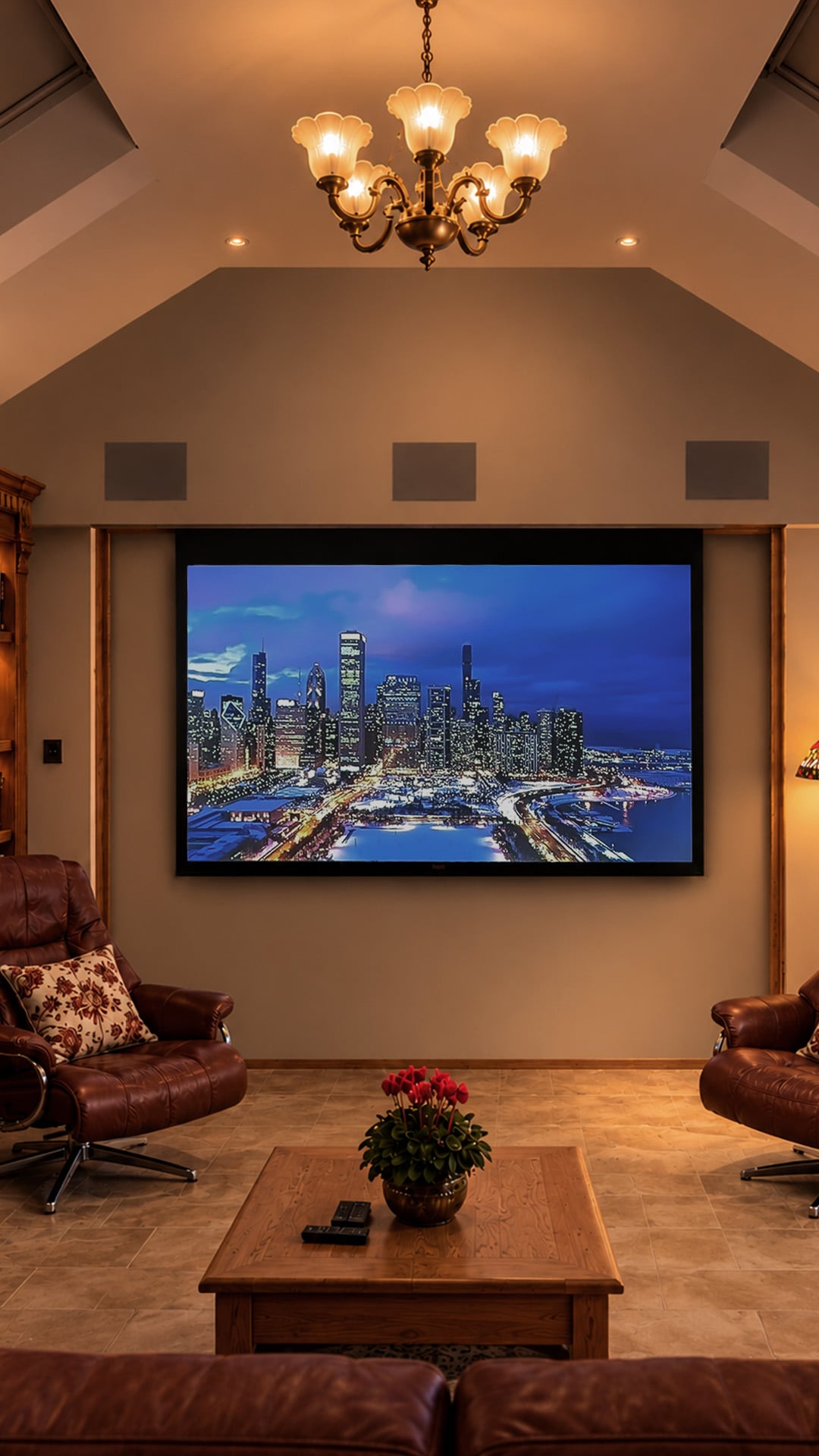
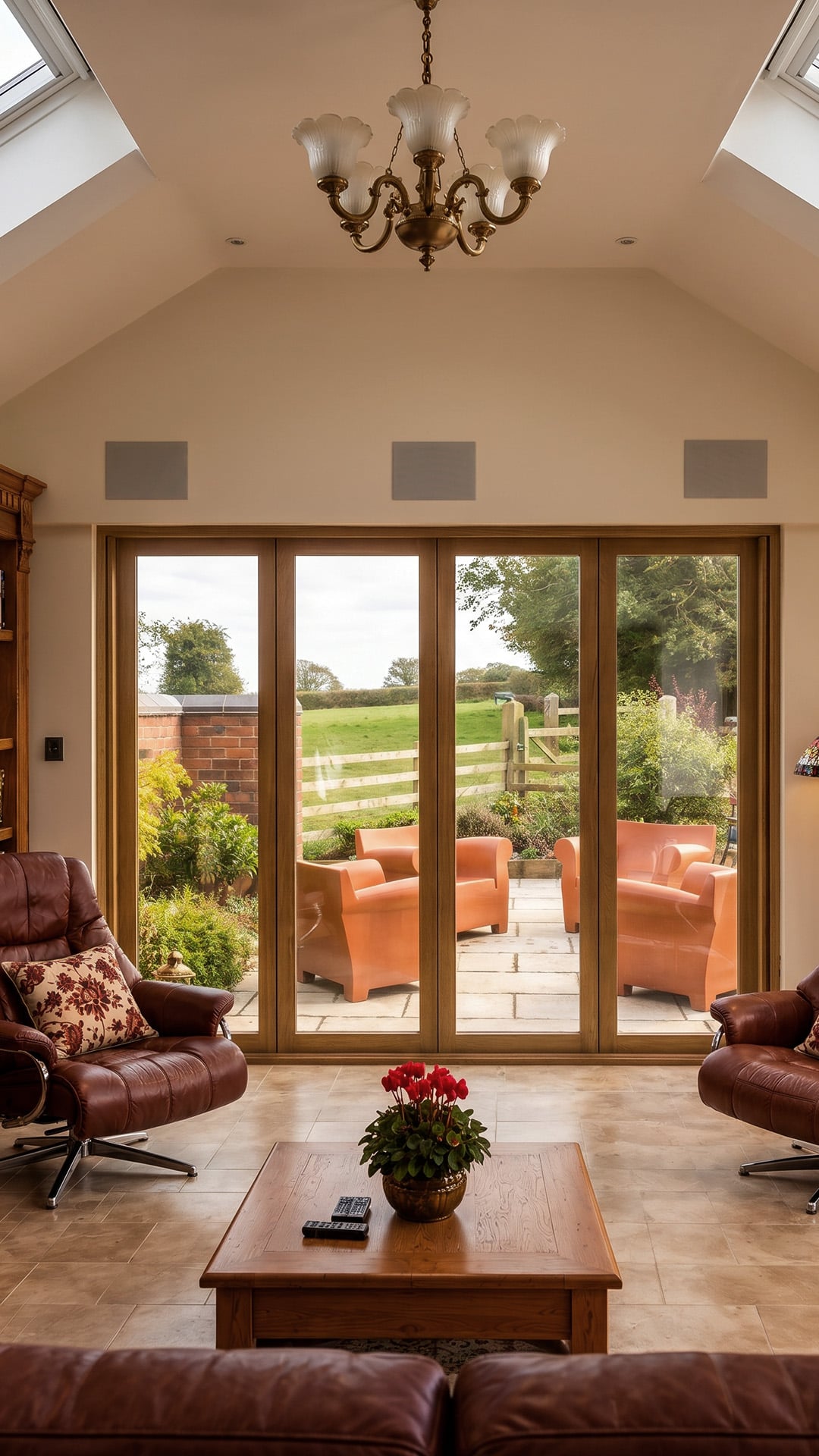
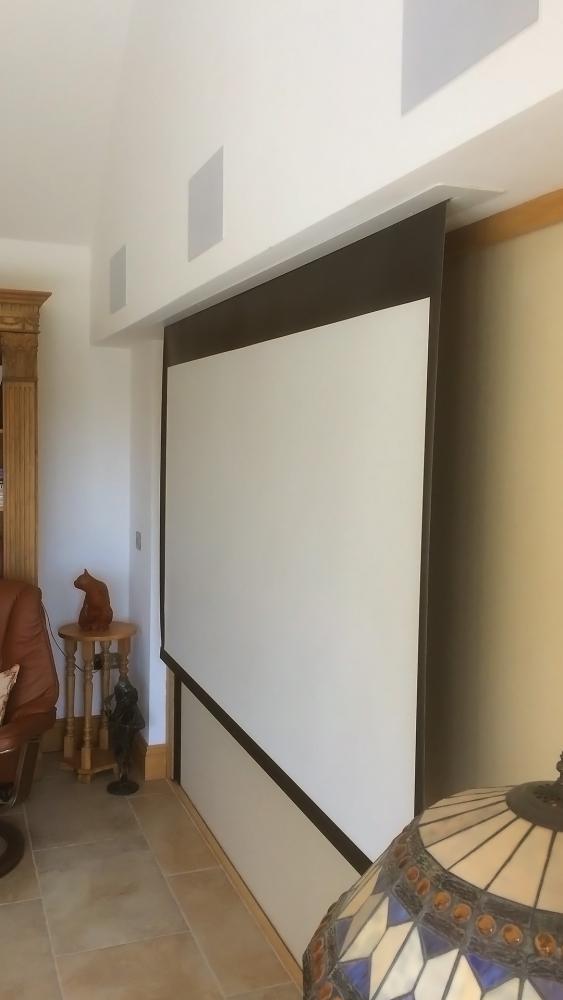
PROJECTOR SCREEN IN FRONT OF WINDOW
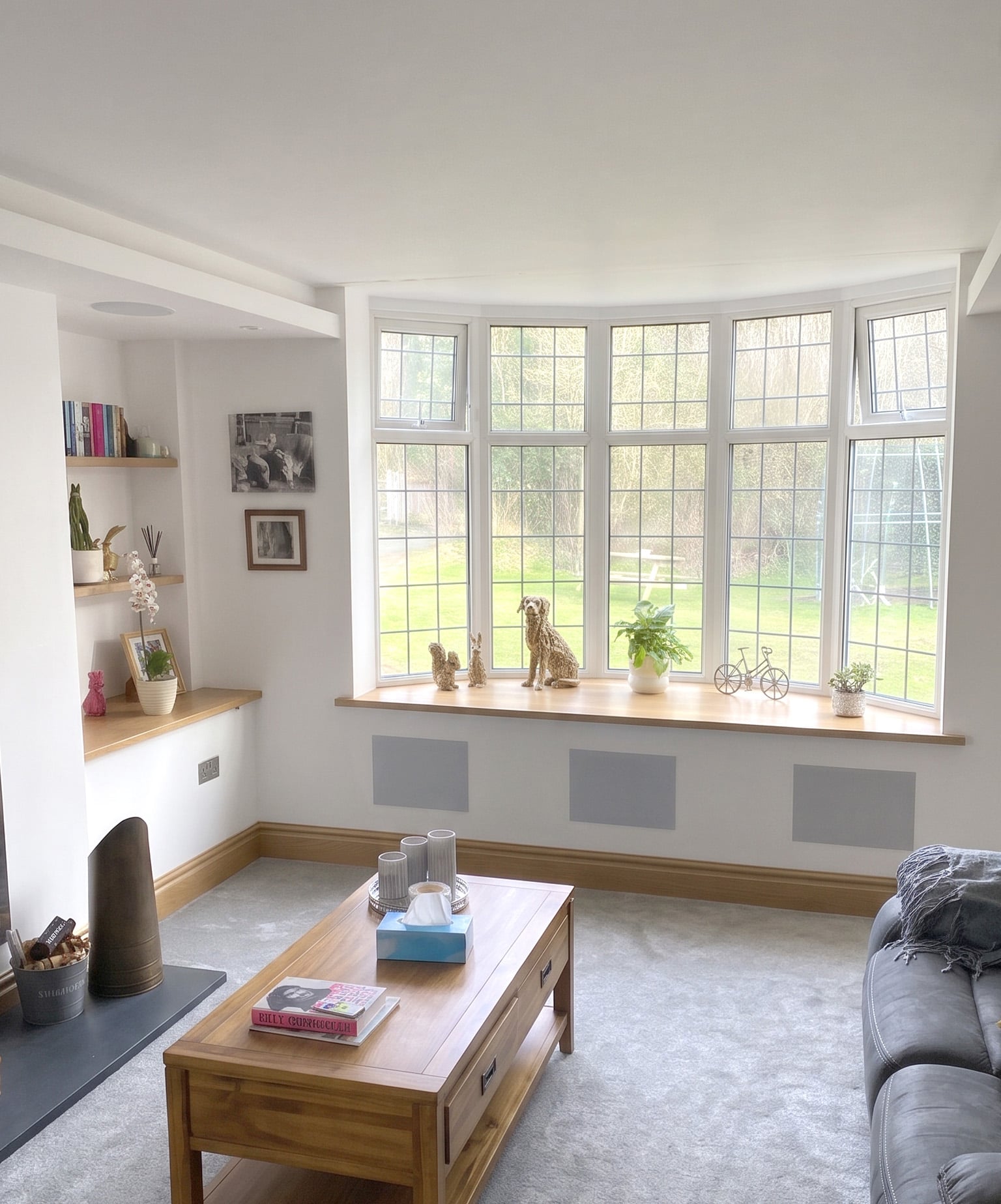
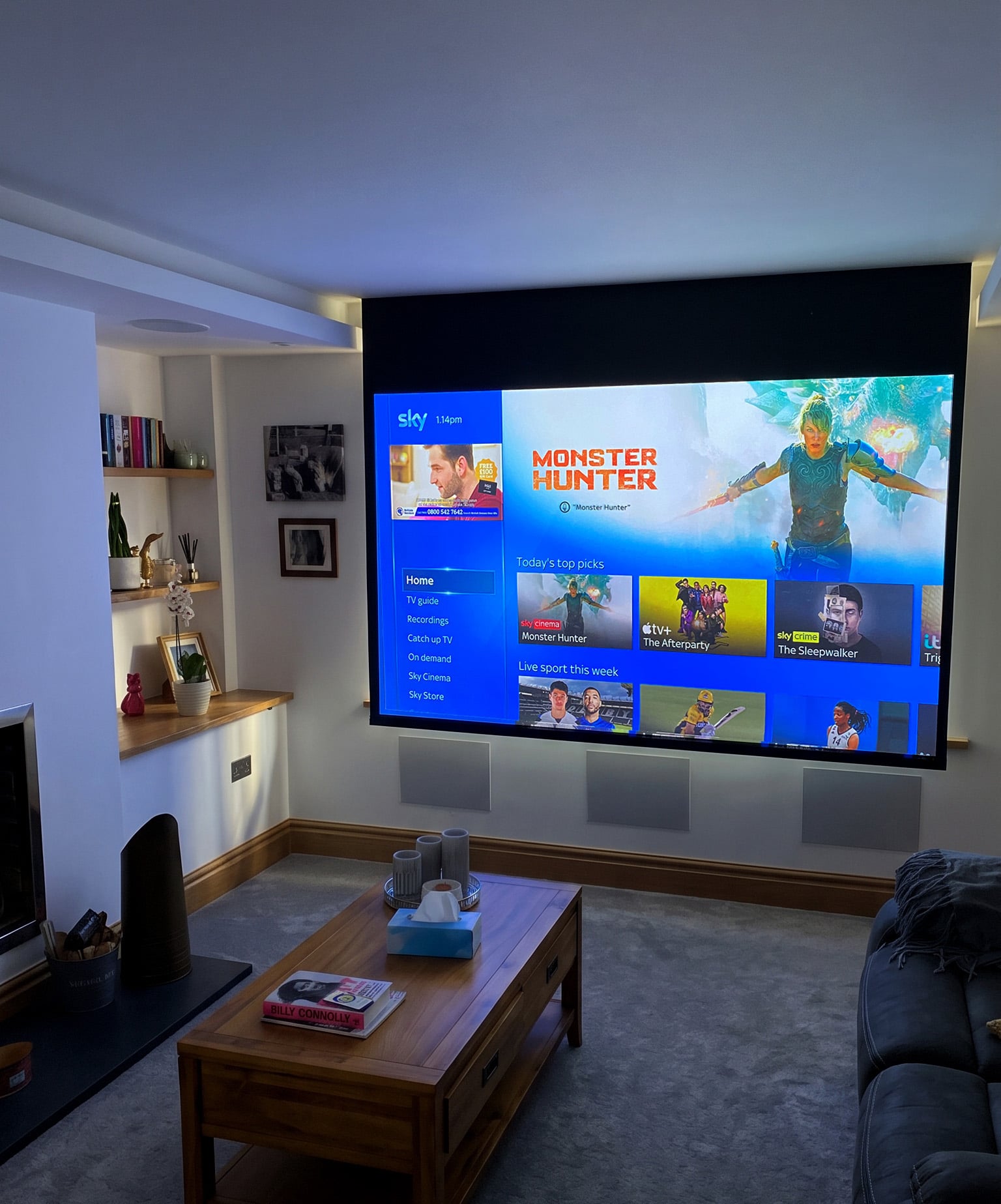
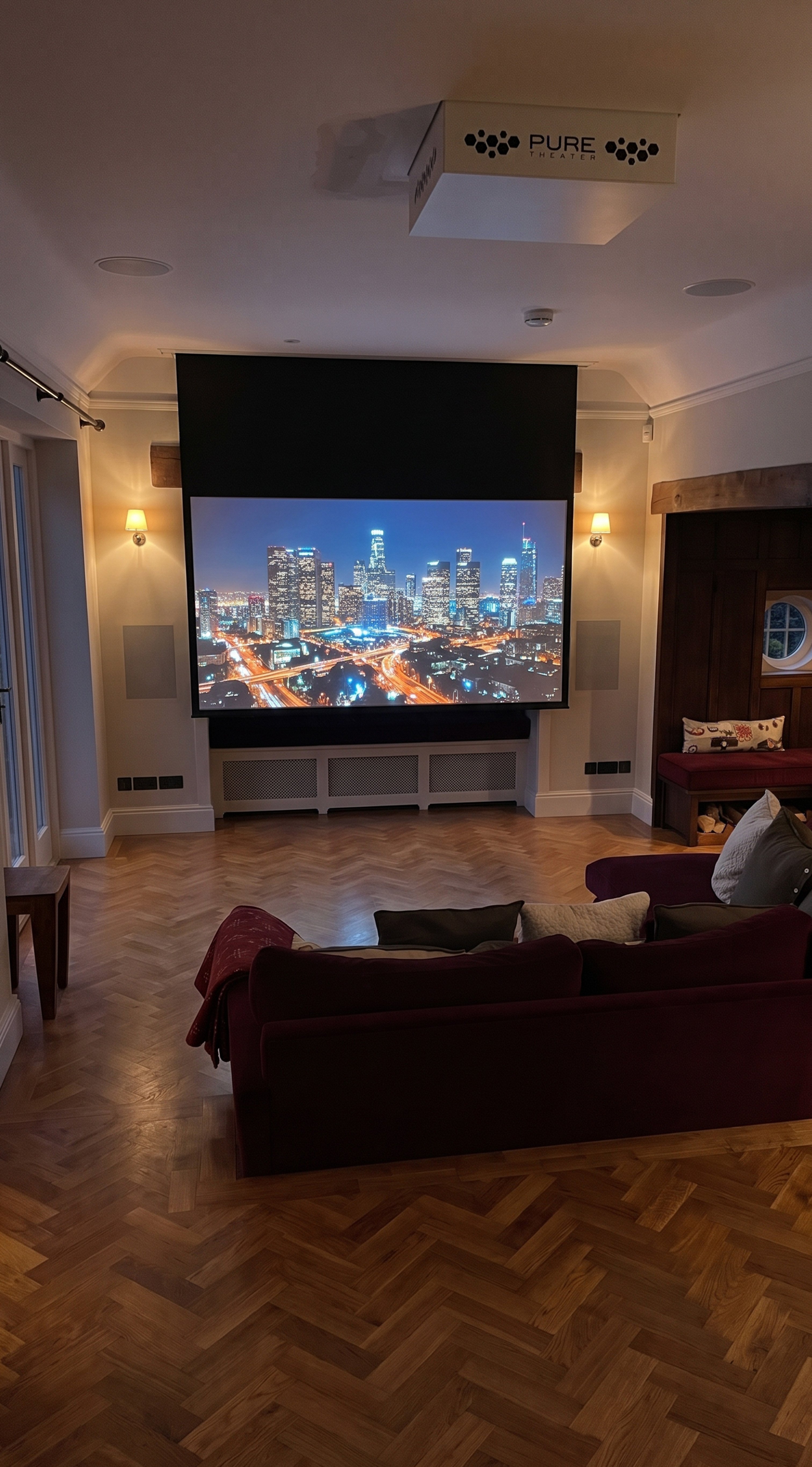
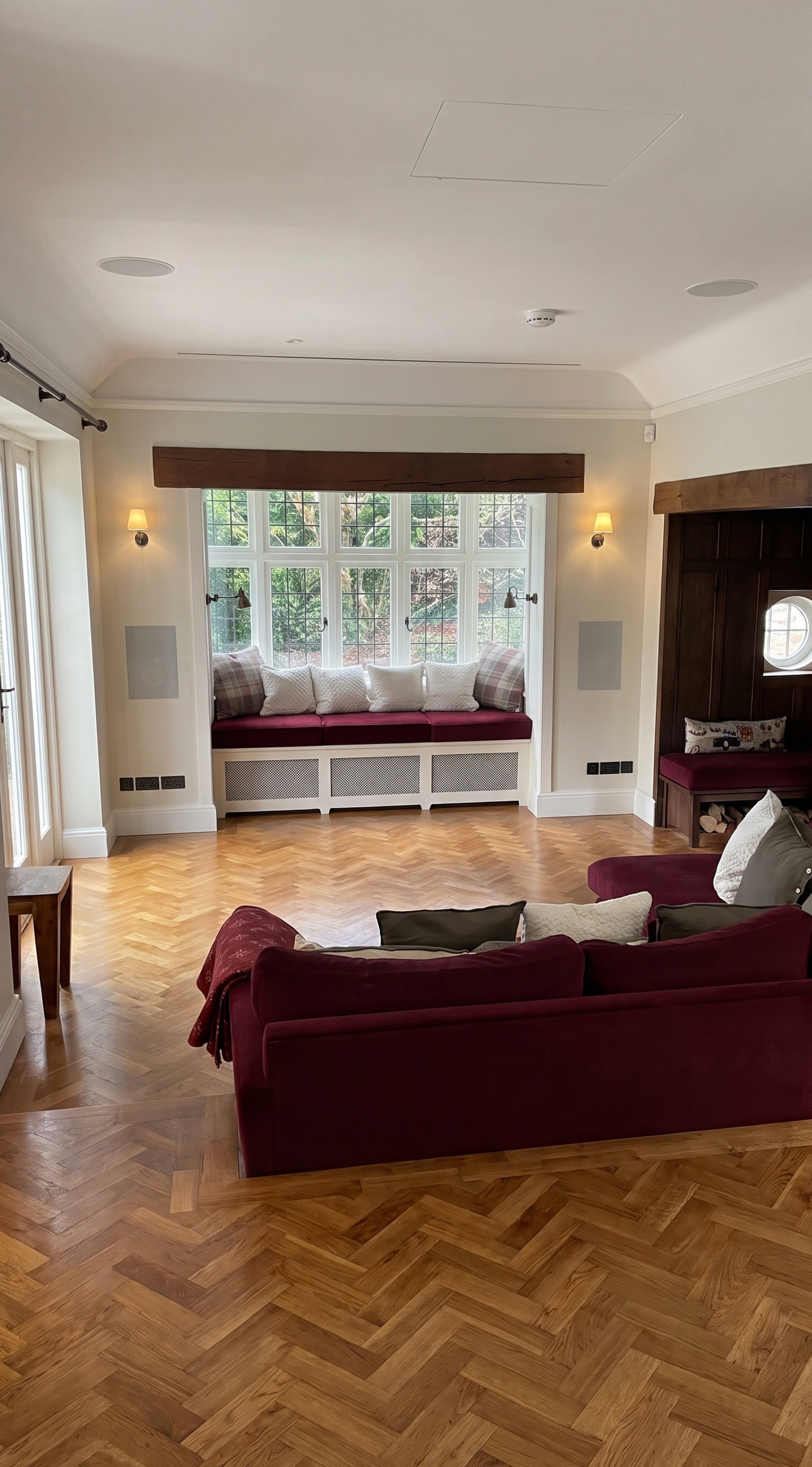
Another popular placement for screens is in front of bay windows. Often bay windows sit directly opposite the seating arrangement in a lounge making it the ideal viewing position for the screen. Additionally, the high-quality materials we use in our screens can block out a lot of the ambient light from the window whilst you are watching the projector giving you superb picture quality. With a bay window, the screen drops down in front of the whole bay, not inside it. The screen case runs straight across the ceiling at the front of the bay, so when it comes down it covers the full opening and gives you a flat, uninterrupted picture. You don't need to change the bay itself, the window seat, or the radiator under the window. When the screen goes up, the bay looks exactly as it did before.

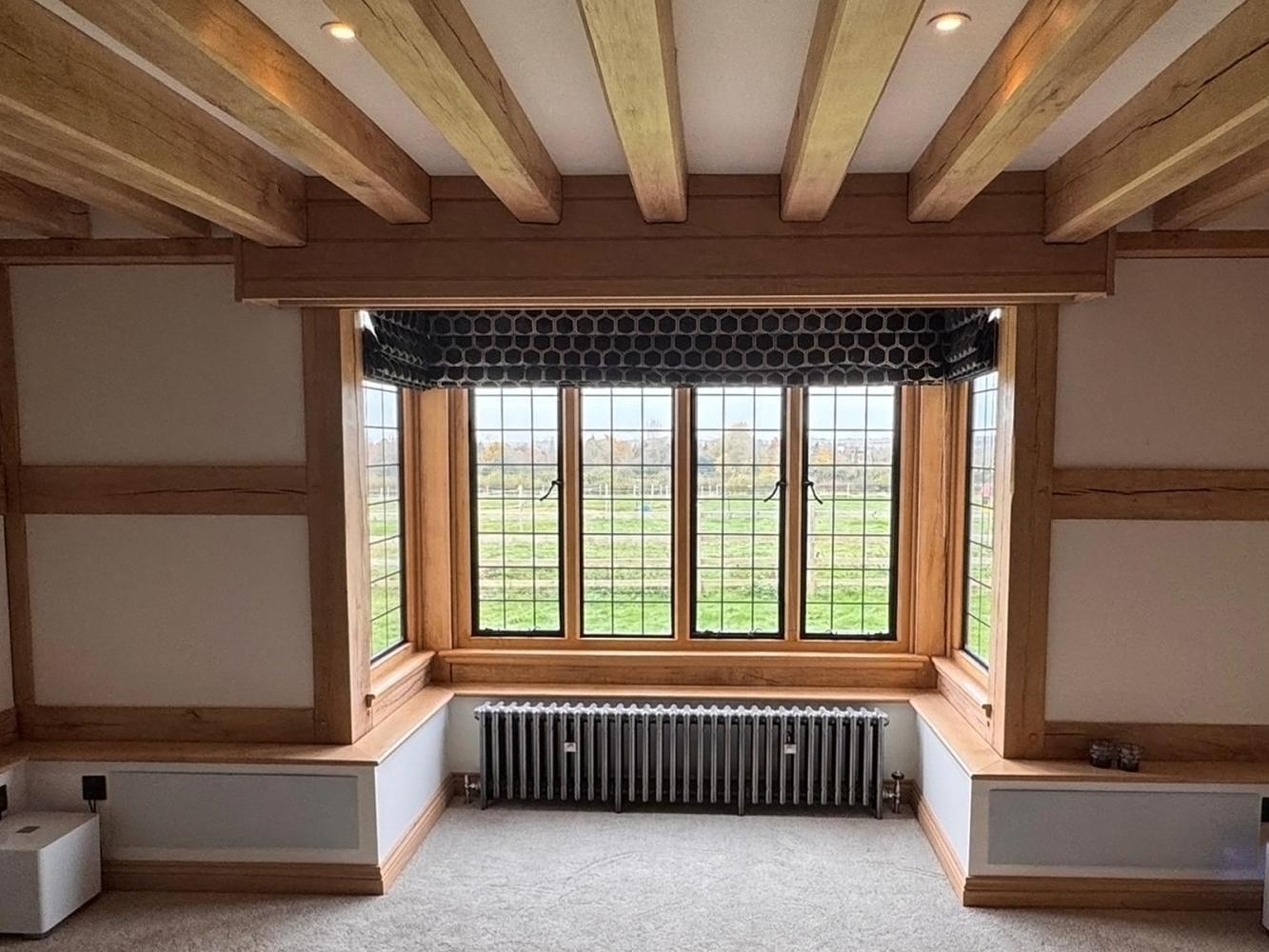
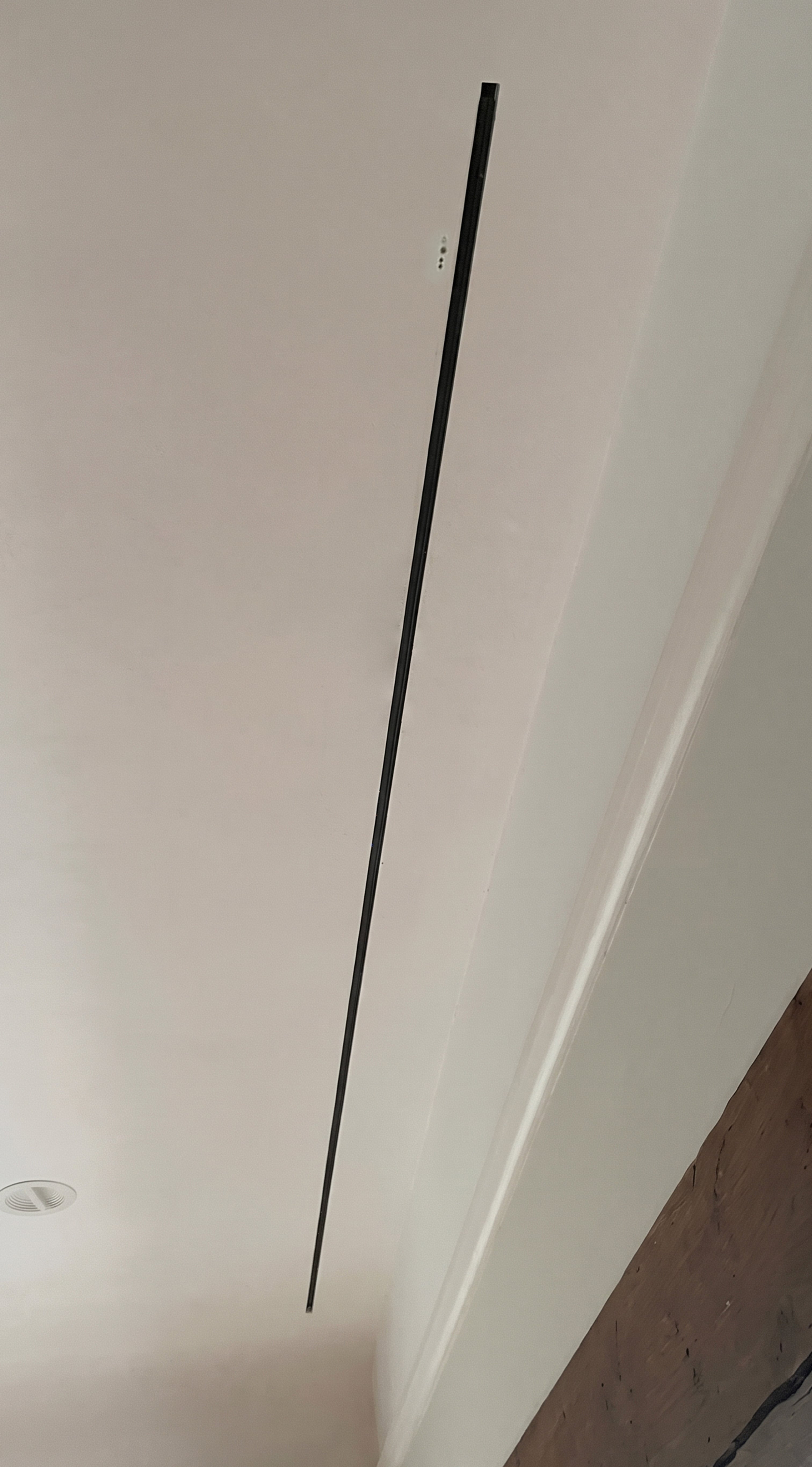
The customer above fitted their projector screen into a custom oak box out to match the rest of their room. Another customer below also had a bay window but they flush mounted the projector screen in the ceiling in front of the window meaning then when retracted all you can see is a simple slit in the ceiling.
If your project is ideal for a projector screen to be fitted in front of the window then why not reach out to our design team who can help you plan the room. Call us on 01952 898533 or you can see the screens for yourself by Booking a demo at our facility.
WATCHING IN THE DAYTIME
Putting the screen in front of the brightest window in the room is a good idea in its own right. The light that would otherwise flood into the room is coming from behind the screen, and the black backing blocks it, so it doesn't wash out the picture. Putting the screen in front of the main light source like this makes a big difference to daytime viewing. One thing to plan for: if the room has other large windows or roof lights, light from those can still fall on the screen and reduce contrast. You'll need some way of controlling it. Most people go for blinds, and motorised blinds are a popular choice because they can close at the same time as the screen comes down. In the evening, or with the other windows covered, you'll get the full cinema picture.